
Living Islands is a Greenhouse initiative that restores small floating wetlands using biodegradable materials and indigenous aquatic plants. Each island acts as a living filter, improving water quality while creating shelter for dragonflies, fish, frogs, freshwater shrimp, aquatic insects, birds, and countless microorganisms.
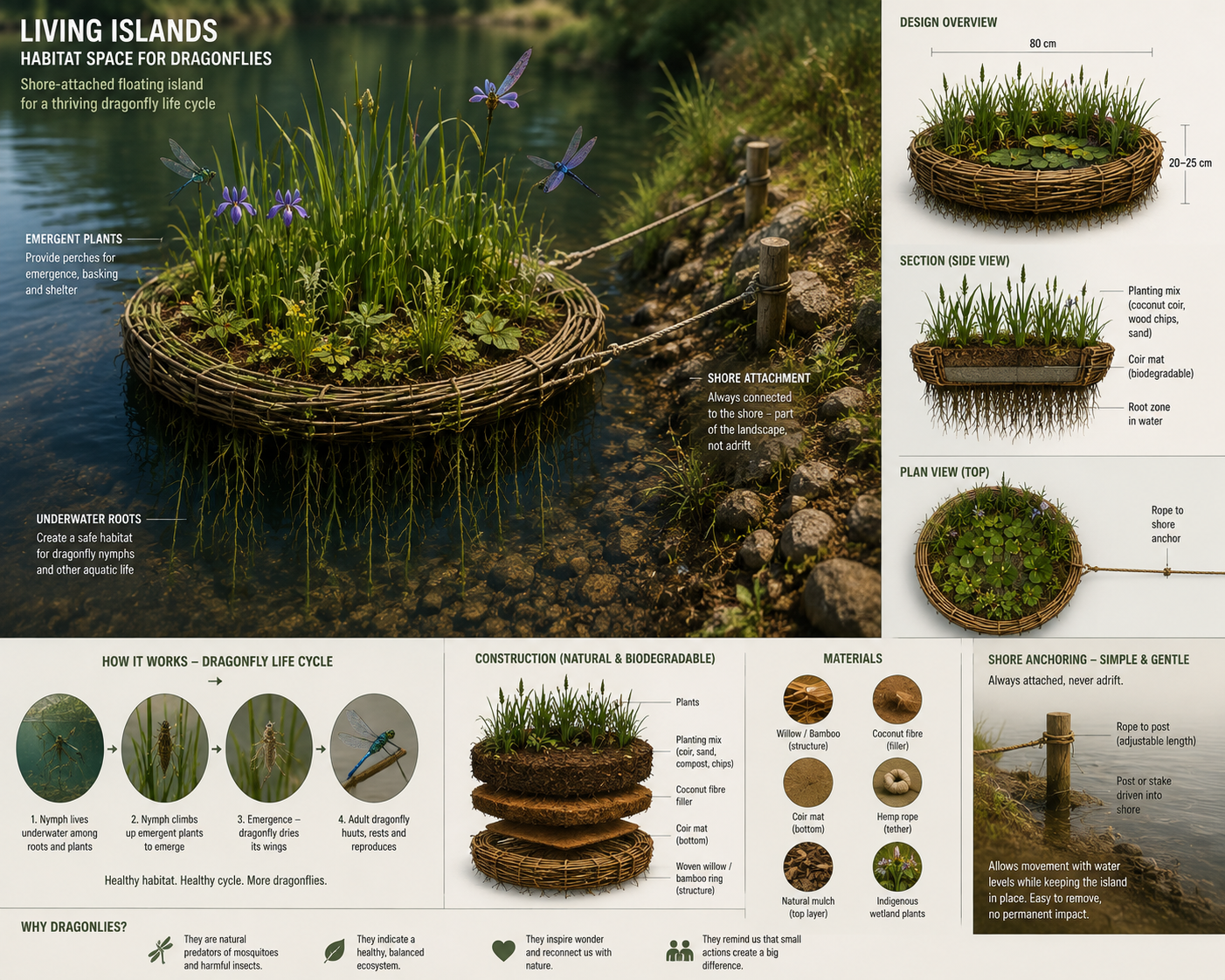
Dragonflies are at the heart of this project. They spend most of their lives underwater as aquatic nymphs, making them one of nature's best indicators of healthy freshwater ecosystems. By creating dense root systems beneath each floating island, we provide safe habitat where young dragonflies can grow before emerging into the air.
Every island is built from natural materials such as willow, bamboo, coconut fibre, and hemp, allowing the structure to gradually become part of the ecosystem. As the basket slowly decomposes, the plants and their roots continue the work, forming a self-sustaining floating wetland.
The project begins in the waterways of Marina da Gama as a community-led experiment in ecological restoration. Over time, a network of Living Islands can help improve biodiversity, naturally filter excess nutrients, reduce algae, create habitat for wildlife, and inspire neighbourhood stewardship of local waterways.
We invite volunteers, schools, environmental organisations, engineers, ecologists, and local residents to help design, build, monitor, and expand this living network of floating wetlands.
The impact
Your support will create homes for dragonflies, an essential participant of the living ecosystem of the vlei.
Dragonflies spend most of their lives underwater. Depending on the species, the nymph (larval) stage lasts from several months to a few years. During that time they live among submerged roots and stems, where they hunt mosquito larvae, small crustaceans, and other aquatic animals. Only after emerging do they become the flying insects we notice.
For a healthy dragonfly population, they need:
clean, oxygen-rich water,
emergent plants such as rushes, sedges, and bulrushes, which the nymphs climb when transforming into adults,
submerged root habitat, where the young can hide from fish,
sunny, sheltered areas, since dragonflies are cold-blooded and need warmth to fly,
no pesticide use, as insecticides can greatly reduce both larvae and adults.
The floating habitat baskets could help with several of these requirements. Dense hanging roots create an underwater "forest" where nymphs can live, and the emergent plants provide places for them to climb out of the water and emerge as adults.
💛 Donate directly
Support the project with a once-off or monthly contribution.
Partner with us
If you’re an organisation, school, or business wanting to support township arts, we would love to connect.
Where the project lives
Marina da Gama, Cape Town's vlei and home for many birds